Star Tribune Spotlights Our Iron Range Child Care Research
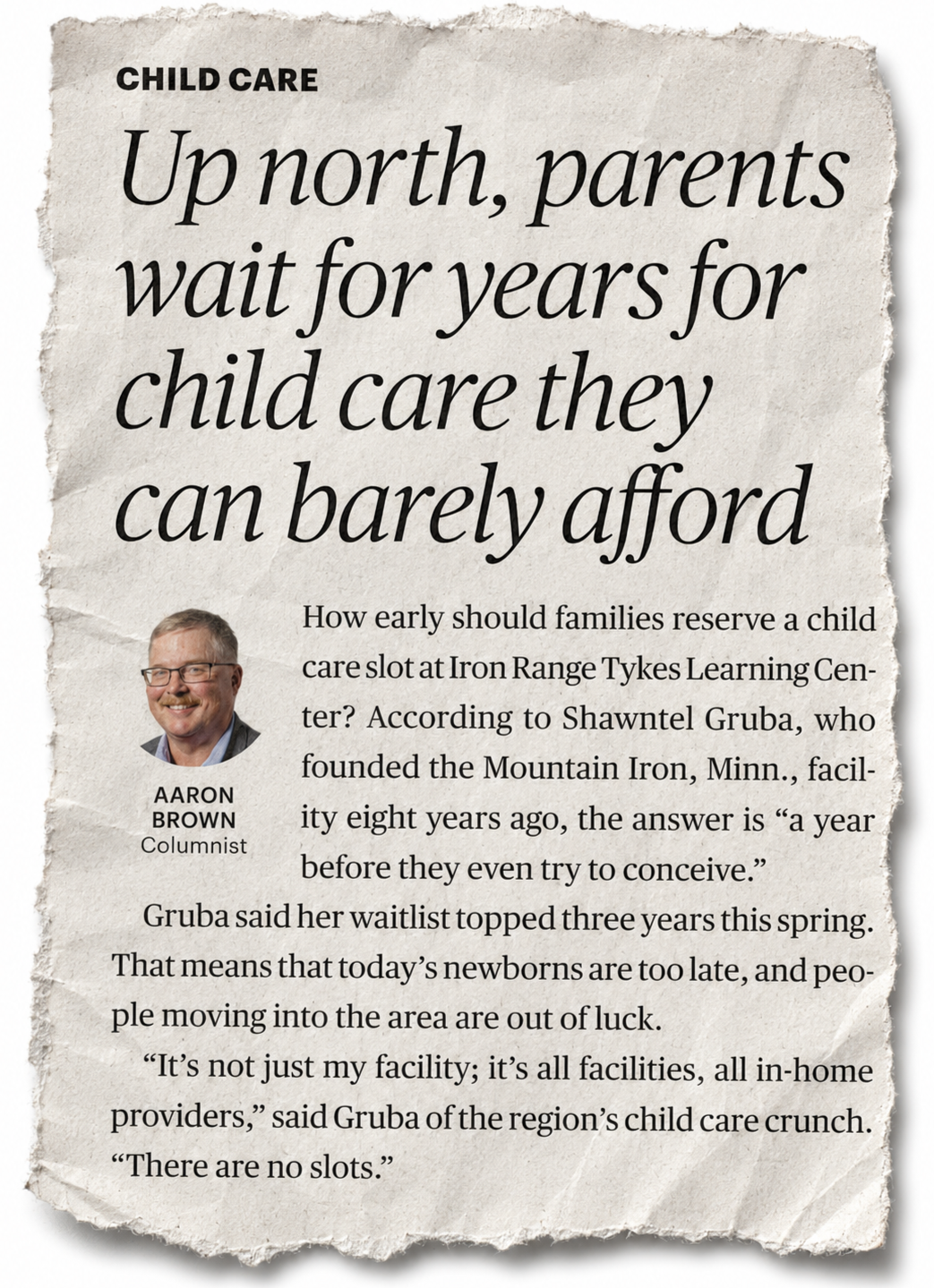
In a May 10, 2026, column for the Star Tribune, Aaron Brown drew on our policy brief Child Care as Workforce Infrastructure to examine why families on Minnesota’s Iron Range face child care waitlists stretching into years. The column, “Up north, parents wait years for child care they can barely afford,” features Rural Pathways co-founder Staci Gilpin alongside senior affiliate Shawntel Gruba, owner of Iron Range Tykes Learning Center in Mountain Iron, Minnesota.
Brown anchors the piece in Gruba’s experience: a waitlist that topped three years this spring, meaning today’s newborns are already too late and new arrivals to the region cannot find a slot at any price.
What the research found
Rural Pathways prepared the brief for the Iron Range Child Care Task Force, drawing on state labor statistics and case data from across the region. A few of the findings the column highlights:
The Iron Range’s median age runs about a decade older than Minnesota’s statewide median, and workforce participation lags the state average by ten percentage points.
Roughly 800 working-age adults already living in the region could enter the labor force if reliable child care were available to them.
Activating that workforce would generate more than $53 million in new economic activity.
Working parents currently relying on child care services already produce nearly $469 million in local economic activity, value the report identifies as needing protection as providers close and waitlists grow.
The statewide average cost of infant care in Minnesota is $20,500 a year, according to Child Care Aware.
Three levers for systems change
The brief lays out three coordinated levers, each targeting a different root cause of the shortage on the Range:
Employer investment. Pooled funds that guarantee child care slots for employees’ children, supported by the federal Section 45F tax credit, which can offset up to half the cost. Local governments and nonprofits can layer in additional support. In one case study highlighted in the column, Talon Metals subsidized slots that made a small center in Tamarack, Minnesota viable.
Provider compensation. Child care educators remain among the lowest-paid trained professionals in the country, fueling chronic turnover. Cook County’s partial subsidy, which brings teacher pay to a minimum of $17 an hour, offers a working example of what a county-level intervention can look like.
Provider supply. Redirecting philanthropic and grant dollars from operating subsidies toward start-up support for new centers and family child care homes, plus catastrophic repair funds for facilities at risk of closing.
As Gilpin told the Star Tribune, “We have to build a supply first and we have to sustain our existing providers.”

Why this matters beyond the Iron Range
While the brief centers on the Taconite Assistance Area, the patterns it surfaces show up across rural Minnesota and rural America: aging workforces, employers struggling to hire, and a care infrastructure that no individual family or single funder can stabilize alone. Brown’s column closes with a reminder that the futures of working families and the regional economy move together, and that communities needing workers now cannot afford to wait for a statewide or federal solution to arrive on its own timetable.
Learn more
Read Aaron Brown’s full column at the Star Tribune: Up north, parents wait years for child care they can barely afford. A PDF is available here.